
The battery gold rush and the home storage boom
By Steven Marshall, Chief Operating Officer
Since the launch of the Federal Government’s Cheaper Home Batteries Program, in July 2025, Australian homeowners have installed more than 466,000 battery system — a figure the government itself has described as exceeding uptake of its EV subsidy. These systems represent over 12 GWh of storage and at the program's April 2026 peak, Australians were installing batteries with an average usable capacity of 44 kWh which roughly triple what a typical system looked like just two years earlier.
This campaign should be considered successful as it yielded genuine consumer behaviour change, which we know is what is needed to fuel the energy transition from the bottom-up. What almost none of those households are thinking about though, is what happens when that battery reaches the end of its life. And this can’t be held against them as it didn’t feature at all in the government campaign and it isn’t something they will have to deal with for another 10 to 15 years anyway.
What is a home battery, and why is everyone getting one?
A home battery is a wall- or floor-mounted unit roughly the size of a small fridge that is installed in a garage, laundry or on an external wall. It stores electricity generated by rooftop solar panels during the day so the household can use it at night, during peak tariff periods, or during a blackout.
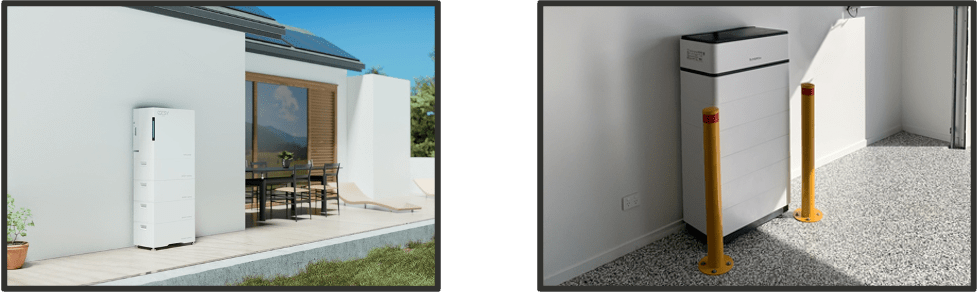
The most common systems being installed in Australia right now use lithium iron phosphate (LFP) batteries with usable capacities ranging from around 5 kWh to 50 kWh. A typical mid-range system costs between $8,000 and $17,000 fully installed before the Federal rebate.
They are not complicated to live with. Once installed and connected to an existing or new solar system, the battery charges and discharges automatically. Most come with an app that shows energy flows in real time — what's coming from the panels, what's going into the battery and what's being drawn from the grid. For most owners the battery is effectively invisible after the first week as it sits on the wall, does its job and the only reminder is a lower power bill.
What makes the current boom different from earlier rounds of battery adoption is scale. The Federal Cheaper Home Batteries Program which is backed by $7.2 billion and expected to be behind more than two million installations by 2030, has shifted batteries from an enthusiast purchase to a mainstream household decision. That two million is made up of new installations and replacement installation for upgraded, more efficient systems where the old batteries have reached end-of-life.
Nobody is thinking about how it ends and the end starts now
What isn't part of that conversation is where the battery goes once it's no longer usable. Every battery installed today is a recycling job on a 10-to-15-year timer, at best. When a lithium-ion battery reaches end of life, it needs to be safely discharged, dismantled and processed so the lithium, nickel, cobalt, manganese, copper and aluminium inside don’t pollute landfill.
Australia does not yet have a comprehensive legislative framework for managing this and industry voices, including us, are calling for government to act now rather than waiting until it is too late such as an Extended Producer Responsibility (EPR) scheme which would make manufacturers, importers and, particularly, installers responsible for the cost and logistics of end-of-life collection and processing.
That matters because it means the infrastructure required to manage this household battery boom needs to be built ahead of the volume rather than scrambling to catch up once the first wave of batteries starts coming out of service.